Ordering & guest experience
Faster service, without rushing the guest.
Guests shouldn't have to wave to be served, and they shouldn't feel processed either. Captains and QR ordering share one queue, so service is quicker and still feels personal.
Captain handhelds, QR ordering and a live table floor working together. Shown with sample data.
The problem
The wait between "ready to order" and "order taken"
Every guest has a moment when they close the menu and look up. What happens next decides the tone of the meal. If a captain is at the table within seconds, the evening starts warmly. If the guest is left waving and glancing around, it starts with a small irritation that no amount of good food quite removes.
On a busy night, that gap is hard to close by adding staff. The captain has six other tables. Paper slips have to be carried to a counter. And a rushed order, taken in a noisy dining hall, is exactly the kind that comes out wrong.
How Jamanvar handles it
Two ways to order, one kitchen queue
Captains carry Android handhelds and take orders right at the table, firing the KOT to the kitchen with a single tap. Guests who'd rather order on their own can scan the QR code on the table and do it from their phone. Both go into exactly the same live queue, so the kitchen isn't watching two systems and the bill isn't split across two records.
The floor plan follows along in real time, and repeat guests are recognised through loyalty tracking, so the team can greet a regular like a regular. The technology takes on the repetitive part of service, which leaves your people free to do the part guests remember.
- Orders in seconds
- A captain can punch an order in under 15 seconds and send it to the kitchen with one tap.
- Guests in control
- Guests who want to order without waiting can, and those who want a captain's advice still get it.
- No lost slips
- There's no paper between the table and the kitchen to misplace or misread.
- Regulars recognised
- Loyalty and repeat-visit tracking helps your team notice who has been here before.
A good fit for: Full-service and fine-dining rooms that pride themselves on attentive service, and busy casual restaurants where a slow first order sets the tone.
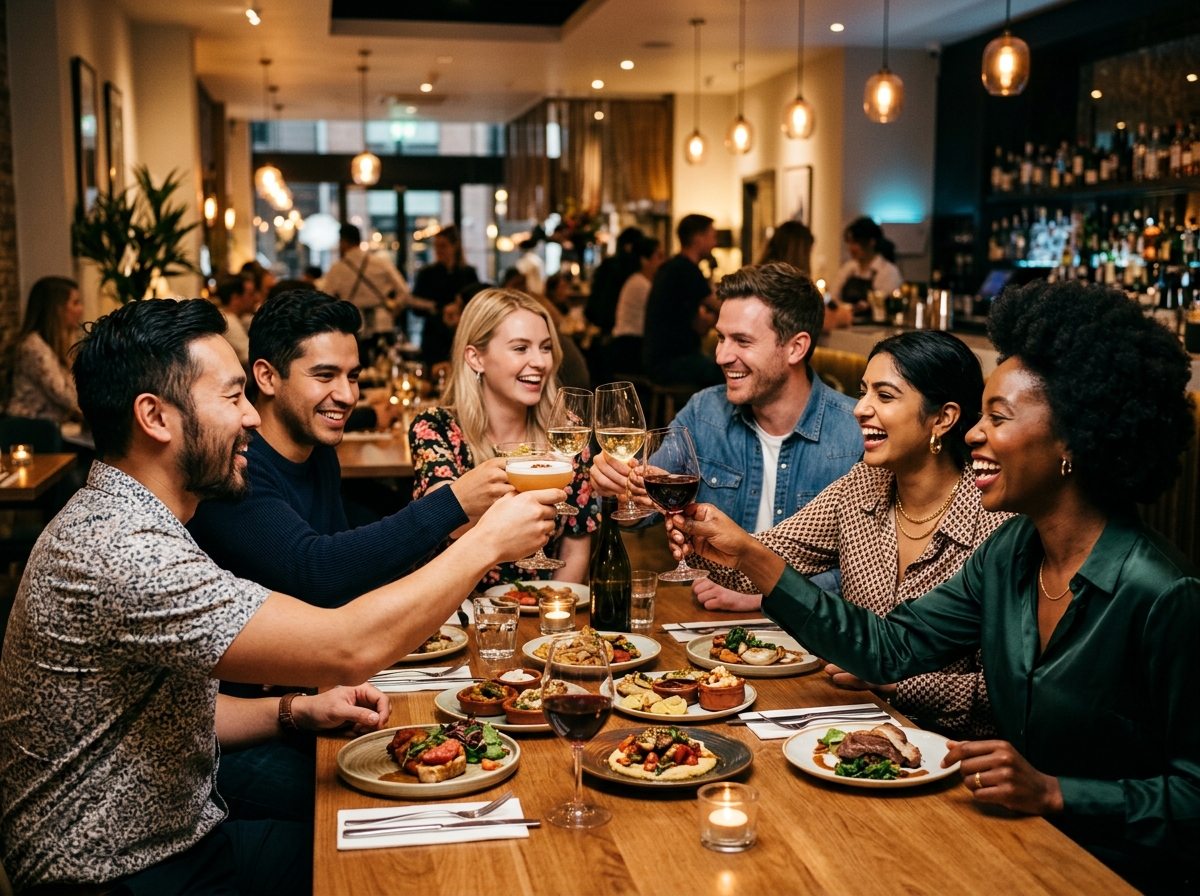
a table of four, on a busy evening
How the workflow changes
An illustrative scene built from the product's real capabilities.
- 1
They sit down
The table turns from available to occupied on the floor plan, and seated time starts.
- 2
Two ways to order
One guest scans the QR code and orders drinks from their phone. The captain arrives, takes the food order on a handheld and adds it to the same table.
- 3
The kitchen gets one clean queue
Drinks go to the bar, the tandoor items to the tandoor. Neither the captain nor the guest had to walk anything anywhere.
- 4
The captain stays with the table
Because nobody's walking slips to a terminal, they can top up water, answer questions and check the table.
- 5
The bill is ready when they are
Everything from both routes is on one live tab, and it settles in whichever way the guests prefer.
What the team sees
The screens behind it
Screens shown with sample restaurant data.
The products behind it
Modules that solve this
Questions owners ask
Does QR ordering replace our captains?
What if guests aren't comfortable ordering on their phones?
How does the kitchen tell the difference between the two?
Which of these sounds like your restaurant?
Tell us what's slowing you down. We'll show you which modules help, and which you can leave alone.